Opinion | US Can Threaten, Not Dictate: What India's Iran Message Really Means
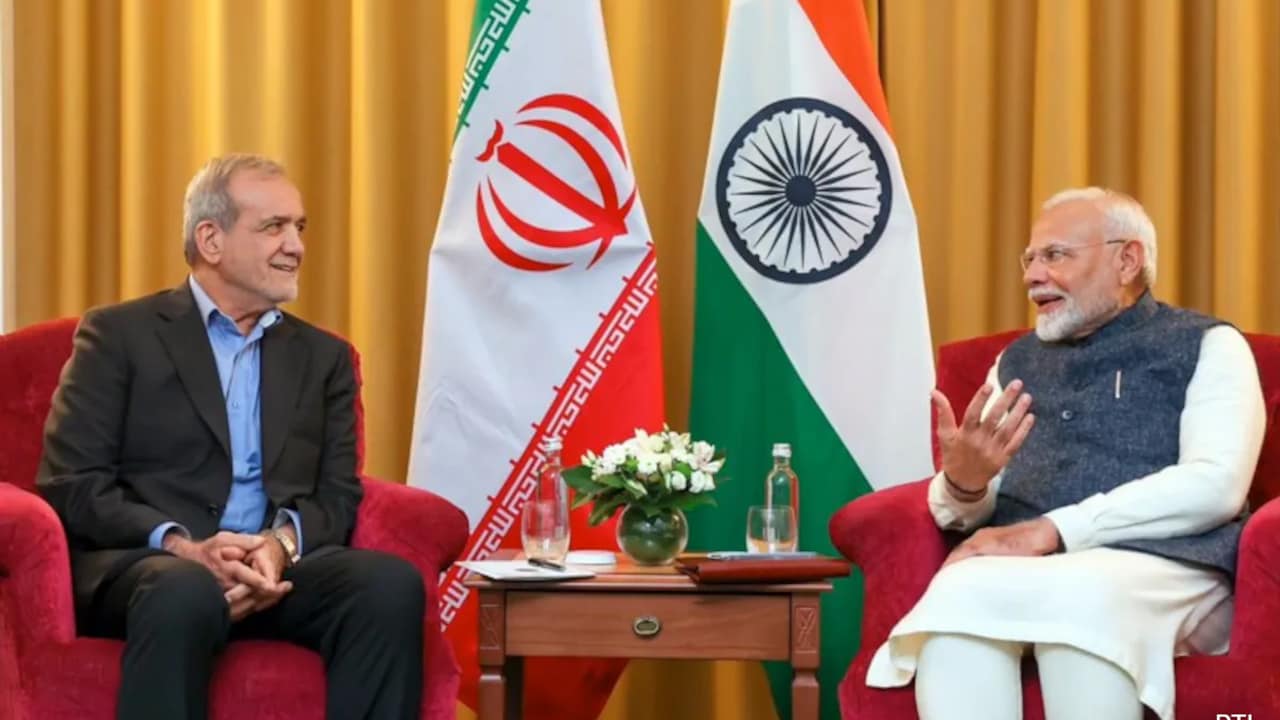
Prime Minister Narendra Modi met Iranian President Masoud Pezeshkian in Bishkek, Kyrgyzstan, on the sidelines of the 26th SCO Summit on August 31. This was the first meeting between the two leaders after the start of the US-Israel conflict with Iran on February 28 this year, and the second after they met in Kazan, Russia, on the sidelines of the BRICS Summit in October 2024.
The meeting came in the wake of the threat by the US Treasury Secretary Scott Bessent on August 24 that countries that trade with Iran will have to face secondary sanctions on their exports to the US. Prior to this, through the declaration of "Operation Economic Outcast", President Trump had indicated that countries engaging in economic activity with Iran would immediately be subjected to 25% tariff on all exports shipped to the United States. Notwithstanding these warnings, PM Modi met Pezeshkian, and soon after took to X, to say: "Met President Masoud Pezeshkian in Bishkek. Reiterated our commitment to strengthening India's long-standing friendship with Iran across diverse sectors. We want to expand and diversify our trade basket in the times to come. We had a discussion on the prevailing situation in the region. India will continue to support all efforts at ensuring peace."
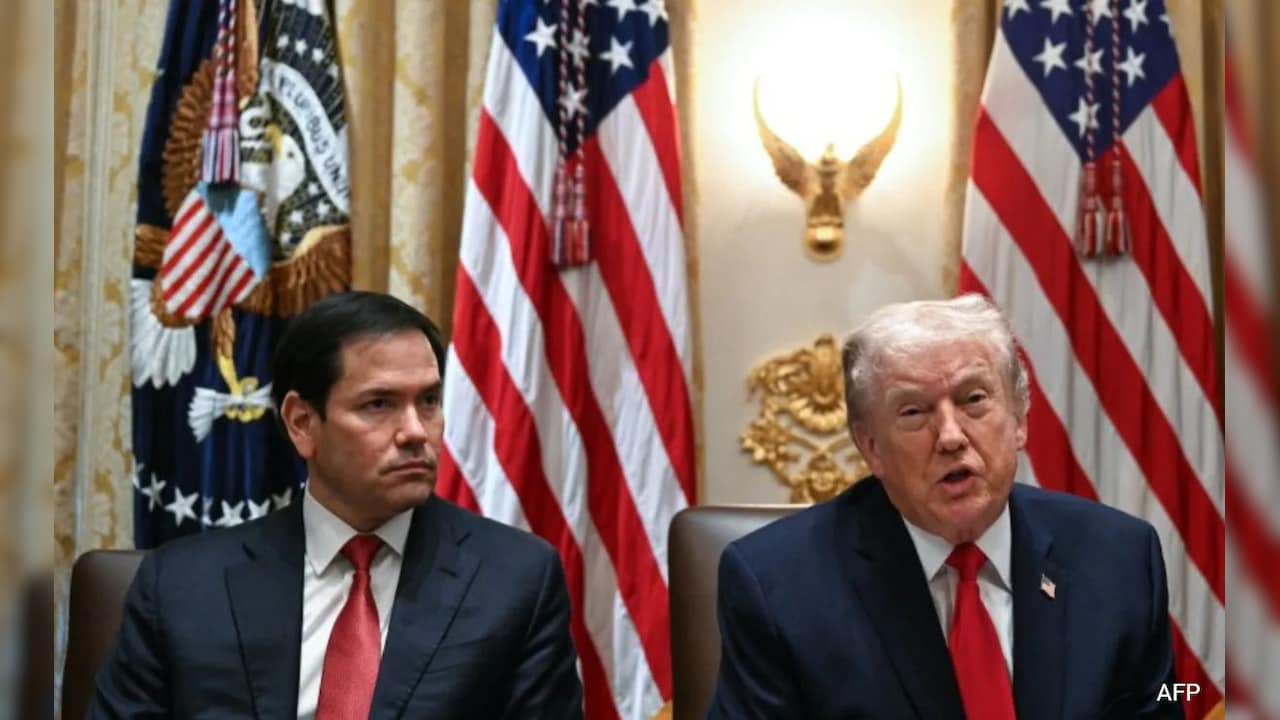
Commenting on the Modi-Pezeshkian meeting, the US Secretary of State, Marco Rubio, inter alia said, "The President has been very clear, no country should be helping Iran evade sanctions ... And if countries decide to do that, then we're going to have to sanction them too." Prior to this statement, Rubio tried to soften his remarks by saying that many countries "develop their own foreign policy and many countries around the world talk to the Iranian regime", adding that even "we've met with elements of the Iranian regime".
What Stands Out
The Modi-Pezeshkian meeting and PM Modi's message stand out for a variety of reasons. Firstly, direct threats by the US to stop trading with Iran have had little, if any, impact on India in advancing its relations with Iran. This will also become evident in the coming days when Pezeshkian visits India for the BRICS Summit on September 12-13.
Secondly, Modi's statement says much, but it leaves even more unsaid. While there is a reference to a discussion on the prevailing situation in the region, there is no mention of how the conflict started, who is responsible for the conflagration, and how it is proceeding. There is no mention of the stranglehold that Iran has established on the Strait of Hormuz and how that is adversely impacting the global economy and energy security, particularly of countries like India, which are heavily dependent on supplies from that region for their energy needs. There is no reference to the number of Indian seafarers who have been killed, several of them by Iranian attacks on ships transiting through the Hormuz. There is no comment on the large number of Indian nationals who have been killed in different Gulf States, particularly the UAE, by the indiscriminate bombings by Iran. India has condemned all these attacks, as also the attacks that led to the killing of our seafarers in the region.
While discussing the recent evolution of relations between India and Iran, particularly in the context of the recent meeting between PM Modi and President Pezeshkian in Bishkek and the forthcoming meeting in New Delhi at the BRICS Summit, it would be useful to explore how these ties have developed over the last few years.
The Obama-Era Sanctions
It would be recalled that under the US National Defense Authorization Act 2012, the Obama administration pressed major buyers of Iranian oil, including China, Japan, and India, to drastically scale back these imports. India undertook a strong diplomatic push to both Obama and then Secretary of State, Hillary Clinton, arguing that an immediate and complete halt would endanger India's national energy security and cause catastrophic price shocks. India was able to get a waiver from the sanctions after it significantly reduced Iran's share in its oil import basket from 12% to 9%.
In 2018-19, when the Trump administration reimposed sanctions under its "maximum pressure policy", Iran was India's third-largest crude supplier, accounting for roughly 10-12% of India's crude oil imports. Following the expiration of the temporary Significant Reduction Exceptions (SRE waivers) in May 2019, India was compelled to bring its Iranian crude oil imports down to zero to avoid US secondary sanctions.
It is important to recall that when Trump withdrew from the Joint Comprehensive Plan of Action (JCPOA) in May 2018, his administration had granted a special carve-out waiver for the Chabahar Port Project. The rationale advanced was that it provided a critical trade and supply corridor for humanitarian aid and reconstruction efforts in landlocked, war-torn Afghanistan, bypassing reliance on Pakistan. This waiver allowed Indian companies and state agencies to develop and operate the Shahid Beheshti terminal without triggering US sanctions. With the recent re-implementation of the Maximum Pressure Policy by the US, this waiver expired on April 26 this year. This reflects the change in US geo-political priorities regarding Afghanistan after the takeover by the Taliban dispensation in Kabul in August 2021. While India has temporarily withdrawn from Chabahar to avoid secondary sanctions, it will wait for a more opportune time to take the project forward, as Chabahar represents India's "gateway" and strategic lifeline to Central Asia and the broader Eurasia.
West Asia Isn't The Same Anymore
It needs to be recognised that the last six months of conflict between US-Israel and Iran have fundamentally reoriented West Asian geopolitics. Rather than neutralising or isolating Tehran, the conflict has demonstrated that no durable security framework in West Asia can be constructed without Iranian participation or accommodation. Iran has used the post-February diplomatic openings to explicitly call for a new West Asian security paradigm that is governed and managed by regional players and not by foreign powers. Iran's geographic and energy footprint, its asymmetric capabilities, and diplomatic outreach ensure that it will remain a primary stakeholder in shaping any future West Asian security order.
Keeping in view India's deep and extensive strategic, security, and economic stakes in West Asia, it is imperative that under the rapidly transforming circumstances, it maintain and further strengthen its historical, civilisational, and cultural ties with all the Gulf States, particularly Iran, which is slated to play a dominant role in the emerging regional security architecture.
West Asia is India's primary energy anchor and a vital market for non-oil exports, remittances, and capital. The region has traditionally supplied 40-45% of India's crude oil needs, 50-60% of India's LNG imports, and 80-90% of its imported cooking gas (LPG). The GCC constitutes India's largest regional trading partner bloc, with total annual trade exceeding USD 175-180 billion. Nearly 9 million Indian expatriates live and work in the Gulf nations, and remit 35-40% (over USD 40 billion) of their global inward remittances.
PM Modi's statement after his meeting with Pezeshkian offers a classic demonstration of judicious ambiguity and calibrated statecraft. It clearly signals that despite several geopolitical challenges, namely, US sanctions, regional escalation, and shipping disruptions, New Delhi will maintain an independent line of communication with Tehran based on its national interest. PM Modi has categorically stated that India will not isolate Tehran under Western pressure, framing the relationship in historical and civilisational terms.
India's Crisp Message
In less than 50 words, India has sent several powerful messages to different constituencies. To Tehran, the message is one of reassurance, that India remains a reliable and independent partner who will continue to collaborate, notwithstanding global pressures. To Washington and Tel Aviv, the message is that these relations continue to be strong, robust, and dynamic. By avoiding inflammatory rhetoric and refraining from commenting on Iran's security narrative, India seeks to preserve its wide-ranging partnerships with these countries. And to the world at large, particularly the Global South, the message presents India as a mature, steady, reliable advocate for regional stability and expanded trade and investment.
The statement is a textbook example of strategic restraint and consummate diplomacy. By saying just enough and no more, and affirming engagement while leaving sensitive issues to behind-the-scenes diplomacy, the statement essentially preserves and reinforces India's strategic autonomy without creating unwanted diplomatic quagmires and schisms.
(Amb. Ashok Sajjanhar was with the IFS for over three decades. He was the ambassador of India to Kazakhstan, Sweden, and Latvia)
Disclaimer: These are the personal opinions of the author